


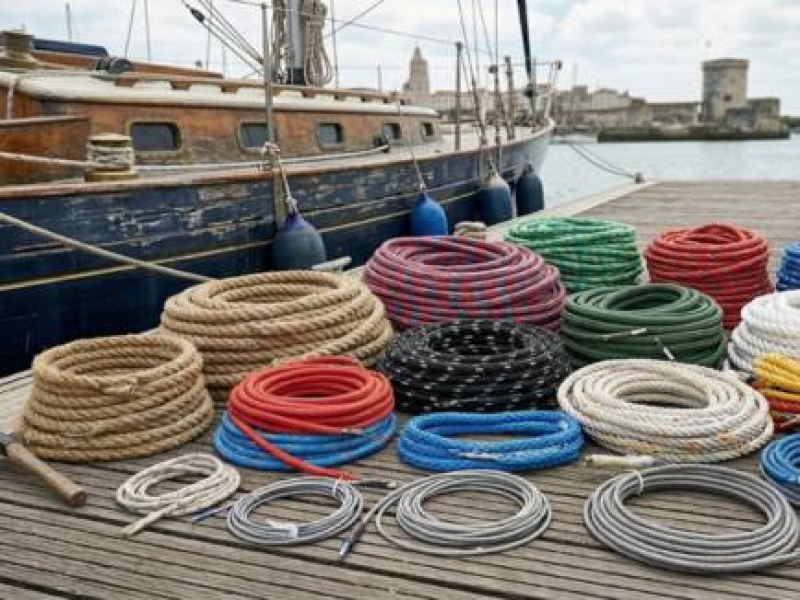
Sailboat Rope Maintenance: Safety and Reliability Every Day
Everything You Need to Know to Keep Your Sailboat Ropes in Good Condition for Longer
Essential to the proper functioning of a sailing boat, sailboat ropes play a crucial role in the safety and performance of the vessel. Halyards, sheets, mooring lines and running lines are subjected daily to significant stress: tension, chafing, moisture, salt water and UV rays.
Like boat sails or other rigging components, sailboat ropes require regular maintenance to preserve their strength and flexibility. A poorly maintained rope can gradually lose its mechanical properties and become a genuine safety risk during manoeuvres at sea.
Discover best practices for cleaning, inspecting and preserving your marine ropes to ensure safe sailing.
Why Maintaining Sailboat Ropes Is Essential for On-Board Safety
The ropes on a sailing boat are never at rest. Even when moored, dock lines work with the boat's movements, while halyards and sheets remain exposed to temperature changes and external elements.
Regular maintenance helps to:
- preserve the strength of the fibres;
- prevent premature wear of the running rigging;
- maintain a good grip during manoeuvres;
- reduce the risk of breakage while sailing;
- extend the service life of nautical equipment.
Modern ropes are designed to be strong, but their lifespan depends greatly on how they are used and maintained.
Cleaning Sailboat Ropes: Regular Rinsing to Preserve the Fibres
After every outing at sea, sailboat ropes accumulate salt, sand and various impurities. These particles can penetrate the fibres and cause progressive abrasion as the rope moves through blocks, winches or cleats.
To preserve your sailboat lines, it is recommended to:
- rinse ropes regularly with fresh water;
- remove salt deposits after sailing at sea;
- use a mild soap for heavy soiling;
- avoid harsh products that can weaken the fibres.
Proper drying is also essential. Before storing your marine ropes, allow them to dry completely to prevent the growth of mould and unpleasant odours.
As with boat sails, a clean and properly maintained rope will retain its performance for longer.
How to Check for Wear on Sailboat Ropes
Inspecting sailboat ropes should be part of regular on-board checks. A rope may appear to be in good condition on the outside while showing weakness in the internal fibres.
The areas to prioritise when checking are:
- chafe points;
- passages through blocks and sheaves;
- rope ends;
- areas subjected to high tension;
- mooring lines permanently exposed to the boat's movements.
Certain signs should alert you:
- frayed fibres;
- damaged outer sheath;
- flattened or deformed sections;
- rope that has become stiff or brittle;
- significant colour change caused by UV exposure.
A sailboat rope showing these signs should be replaced promptly. A breakage during a manoeuvre can cause material damage or put the crew in a dangerous situation.
Protecting Your Sailboat's Ropes and Running Rigging
UV rays, chafing and improper tension are the main causes of wear on marine ropes.
To protect your sailing equipment, remember to:
- regularly check contact points with the deck and rigging;
- fit chafe protection where necessary;
- avoid repeated rubbing against masts, stanchions or metal fittings;
- protect unused ropes from prolonged sun exposure.
Synthetic ropes hold up well in marine conditions, but permanent exposure to UV rays can gradually reduce their strength.
Preparing Sailboat Ropes for Winter Storage
Cleaning and Maintaining Ropes
The winter lay-up period is the ideal time to carry out a full inspection of the running rigging and nautical equipment.
Before leaving your sailing boat at rest, take the time to:
- clean all ropes;
- check the condition of halyards, sheets and mooring lines;
- replace any lines showing significant wear;
- check chafe points;
- adjust halyards properly to prevent them from slapping against the mast.
Good winter preparation means your boat will be ready to sail again as soon as the season returns.
Storing Sailboat Ropes Properly
Storage plays an important role in preserving marine ropes. Poor storage can cause twisting, deformation or premature deterioration of the fibres.
To store your sailboat ropes correctly:
- coil them neatly without compressing them too tightly;
- avoid permanent knots;
- remove any twists before storing;
- keep them in a dry, well-ventilated place;
- protect them from direct sunlight.
A properly stored rope will remain more supple, more pleasant to handle and more reliable on future sails.
Rope Maintenance: Best Practices to Adopt
Maintaining sailboat ropes is a simple but essential step in ensuring on-board safety. A few regular actions are all it takes: rinsing after sailing, careful inspection and proper storage.
Taking care of your marine ropes means preserving your running rigging, avoiding unpleasant surprises and making the most of your time on the water.
A well-maintained sailing boat is a safer one: ropes, just like sails and deck hardware, deserve your full attention.
Share this content